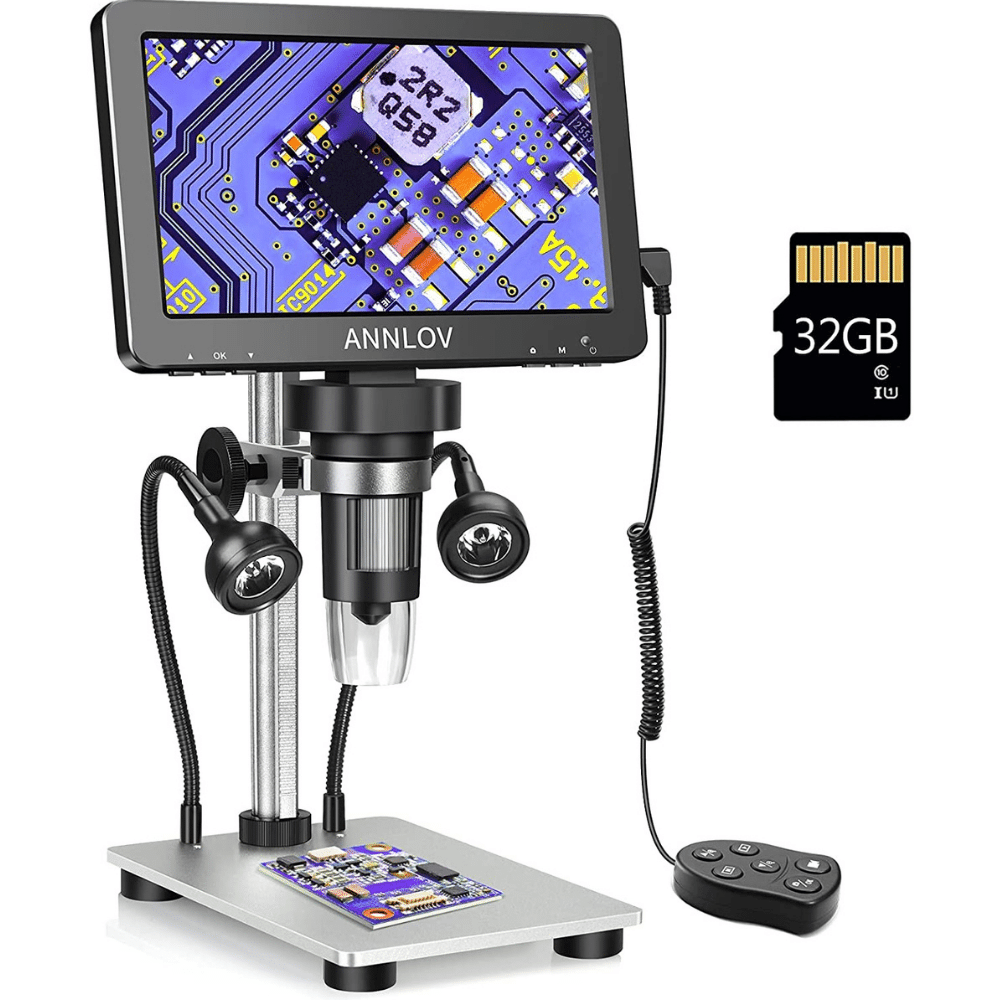
About The Takmly microscope

Wondering whether a USB microscope is the right tool for your workbench, study setup, or hobby table? If you regularly deal with tiny details—whether that means inspecting circuit boards, checking coin condition, examining jewelry settings, studying stamps, looking at textile fibers, or reviewing small mechanical parts—a USB microscope can be one of the most practical tools you add to your setup.

USB microscopes have become increasingly popular because they make close-up viewing much easier and more accessible than traditional microscopes for everyday tasks. Instead of bending over an eyepiece, you can view your subject on a larger screen through your laptop or desktop computer. Depending on the model, some units also support wireless connectivity with compatible Android devices, giving users a more flexible way to inspect, capture, and share what they see.

This style of microscope is especially appealing for people who want convenience. You can quickly place an object under the lens, adjust the lighting, focus the image, and begin viewing details in real time. That makes USB microscopes useful not only for hobbyists and collectors, but also for students, repair work, documentation, and general close-up observation.

In this comprehensive review, we’ll explain what to look for in a USB microscope, how important features affect real-world performance, and why a Takmly microscope can be a practical option for everyday inspection. Whether you are buying your first microscope or upgrading from a basic entry-level model, this guide is designed to help you make a confident and informed choice.

Why People Choose a USB Microscope

One of the biggest reasons people choose a USB microscope is ease of use. Traditional microscopes are excellent for many scientific and lab-based applications, but they are not always the most convenient solution for practical inspection tasks. A USB microscope is often faster to set up, easier to display on-screen, and better suited for showing details to another person beside you.

For example, if you are working on electronics, a USB microscope allows you to inspect solder joints, trace tiny components, and read small markings without needing to constantly reposition your eye. If you collect coins or stamps, it can help you study condition, texture, print details, or surface wear. If you work with jewelry, it can be useful for looking at settings, engravings, stones, and fine finishing details. Even students and curious beginners can use one to explore everyday materials in a more engaging way.

The key advantage is that the viewing experience feels modern and practical. You are not just observing—you can also capture still images, record video, compare findings, and document your work more easily.

How We Choose

You want to buy a USB microscope but don’t know which one to choose—and that’s completely normal. On paper, many microscopes look similar. They often advertise very high magnification numbers, “HD” image quality, built-in LED lighting, and broad compatibility. But in real-world use, the best microscope is not the one with the biggest number on the box. It is the one that gives you a stable, sharp, well-lit image and fits the way you actually plan to use it.

With so many different USB microscopes on the market, it can be difficult to separate useful features from marketing claims. Some models are ideal for quick casual viewing, while others are better suited to tasks that require greater stability and precision—such as PCB inspection, reading tiny serial numbers, evaluating collectibles, or checking fine textures.

To make the selection process easier, we focused on the factors that matter most in everyday use:

  • Image clarity and usable magnification — We look beyond advertised maximum zoom levels and focus on the range where details remain sharp, readable, and practical for real work.
  • Stand stability — A microscope can have a good sensor and still feel frustrating if the stand shakes too easily. Stability becomes even more important at higher magnification, where tiny vibrations can make the image difficult to use.
  • Lighting control — Adjustable LEDs are important, but just as important is how well the light can be managed on reflective surfaces. Coins, jewelry, polished metal, and solder joints can all create glare that reduces visible detail.
  • Focus control and working distance — A useful microscope should provide enough room to position objects comfortably under the lens, especially when you need to work with tools underneath. Focus should feel controllable, not overly touchy.
  • Ease of setup — Connection should be straightforward on desktop systems through USB, and wireless or Android support should be genuinely useful when offered, not just an extra bullet point on the packaging.
  • Value for money — We consider what is included in the package, how well the microscope is built, and whether the actual user experience matches its price category.

We’ve done the hard work for you by analyzing product specifications, comparing real-world usability factors, and reviewing common user feedback patterns. The goal is simple: help you find a microscope that is dependable, easy to use, and suitable for your needs—whether you’re learning, repairing, collecting, documenting, or simply exploring small details more closely.

What Makes the Takmly Microscope Stand Out

The Takmly microscope is appealing because it aims to balance convenience, functionality, and affordability. For many buyers, that balance matters more than chasing extreme magnification claims. A practical USB microscope should make everyday inspection easier, and that usually depends on a combination of decent image quality, usable lighting, and a stand that keeps the viewing position reasonably steady.

Takmly-style digital microscopes are often chosen by users who want a flexible tool for bench work, close-up viewing, and occasional image capture without moving into the higher price range of more advanced inspection systems. That makes them attractive to beginners, hobbyists, casual collectors, and repair users who need a clear working view but do not necessarily need a full laboratory setup.

Another benefit is the learning curve. A microscope that is simple to assemble and start using can be far more valuable than a technically stronger model that feels frustrating during setup. In many home and workshop environments, practical usability matters just as much as raw specifications.

Real-World Performance Factors

When evaluating a microscope like the Takmly, it is important to think about real usage instead of just spec-sheet numbers. In practice, the quality of your experience often comes down to three things: stability, lighting, and focus.

Stability matters because even slight movement becomes highly visible when magnification increases. If the stand flexes or wobbles too much, it becomes harder to inspect details accurately. This is especially noticeable when looking at electronics, engraved surfaces, or tiny defects.

Lighting matters because close-up subjects often need more illumination than people expect. Built-in LEDs can be very useful, but they need to be controlled carefully. Too much direct light can wash out detail or create reflections on shiny materials. Good lighting should help reveal texture, edges, and contrast without overpowering the image.

Focus matters because a microscope is only useful when you can quickly reach a sharp viewing point. A focus mechanism that is too sensitive can make the image frustrating to stabilize. A more controlled focus experience helps users inspect objects faster and with less effort.

Who This Microscope Is Best For

The Takmly microscope can be a good choice for a wide range of users:

  • Electronics hobbyists and repair users who need to inspect solder joints, connectors, surface-mount components, and fine board details.
  • Coin, stamp, and collectible enthusiasts who want to examine condition, markings, texture, or edge details more clearly.
  • Jewelry users who need a closer look at settings, surface finish, engravings, or small construction details.
  • Students and beginners who want an approachable way to explore microscopic details without the complexity of a traditional microscope setup.
  • General workshop users who need magnified inspection for tiny parts, precision work, or documentation.

That said, expectations should remain realistic. USB microscopes are extremely useful for inspection and viewing, but they do not always replace specialized scientific microscopes or high-end industrial inspection systems. The best results usually come when the microscope is used within its strongest range: practical close-up work, not exaggerated maximum zoom claims.

The ANNLOV AM04 is easy-to-use and perfect for any kids interested in science.

How the Takmly Compares to Other USB Microscopes

Compared with many other USB microscopes in its general category, the Takmly microscope is best judged by its everyday practicality. Some competing models focus heavily on large advertised magnification numbers, while others offer built-in displays or different stand designs. In many cases, however, the actual user experience still comes back to the basics: how sharp the image looks, how stable the setup feels, and how easy it is to focus on the subject.

For buyers comparing multiple options, it is worth remembering that a microscope with slightly more modest specifications but better ease of use can often be the smarter purchase. A model that is easier to position, easier to light, and easier to focus will usually feel better over time than one that sounds impressive in marketing but proves awkward during real tasks.

Things to Look For Before Buying

Before choosing a USB microscope, ask yourself how you actually plan to use it. Do you need it mainly for viewing, or do you also want to capture images and video? Will you be inspecting flat objects like coins and stamps, or working over raised subjects like circuit boards and mechanical parts? Do you need space under the lens to use tools while viewing live?

These questions help narrow down what matters most:

  • If you need to work with your hands under the microscope, prioritize working distance and stand clearance.
  • If you inspect reflective materials, prioritize controllable lighting and glare reduction.
  • If you need accurate visual inspection, prioritize stable support and smooth focus.
  • If you are buying for learning or casual exploration, prioritize simplicity and overall ease of use.

Final Thoughts

A USB microscope can be an excellent investment for anyone who regularly works with small details. It offers a more comfortable and modern way to inspect, observe, capture, and share magnified views without the limitations of a traditional eyepiece-only setup.

The Takmly microscope stands out as a practical choice for users who want useful close-up viewing in a format that is approachable and versatile. Its value lies not just in magnification claims, but in how effectively it supports real-world tasks such as inspection, repair, collection review, and educational use.

If your goal is to find a microscope that is easy to set up, capable of delivering clear close-up views, and suitable for everyday detail work, the Takmly microscope is well worth considering. The best choice is always the one that fits your actual workflow—and for many users, a dependable USB microscope like this can make close-up inspection faster, easier, and much more enjoyable.

Note :

"About The Takmly microscope"

This content is uploaded by APP SETUP DEVELOPER and available on Google Play Store. APP SETUP DEVELOPER do not own this content and this content credits to their respective owners listed in the source link. Hopefully useful and share this app.

Design and Coded by www.idblanter.com www.blantertheme.com www.blantermedia.com (Rio Ilham Hadi) 08888905441